5.01 months ago
“Review”
quick IDs and the care tips are actually useful, not generic filler. watering reminders saved a couple of mine ngl. only gripe is the price, feels like a lot if you're not on it every week.
Shaikh Farhan

Identify plants from pictures using AI.
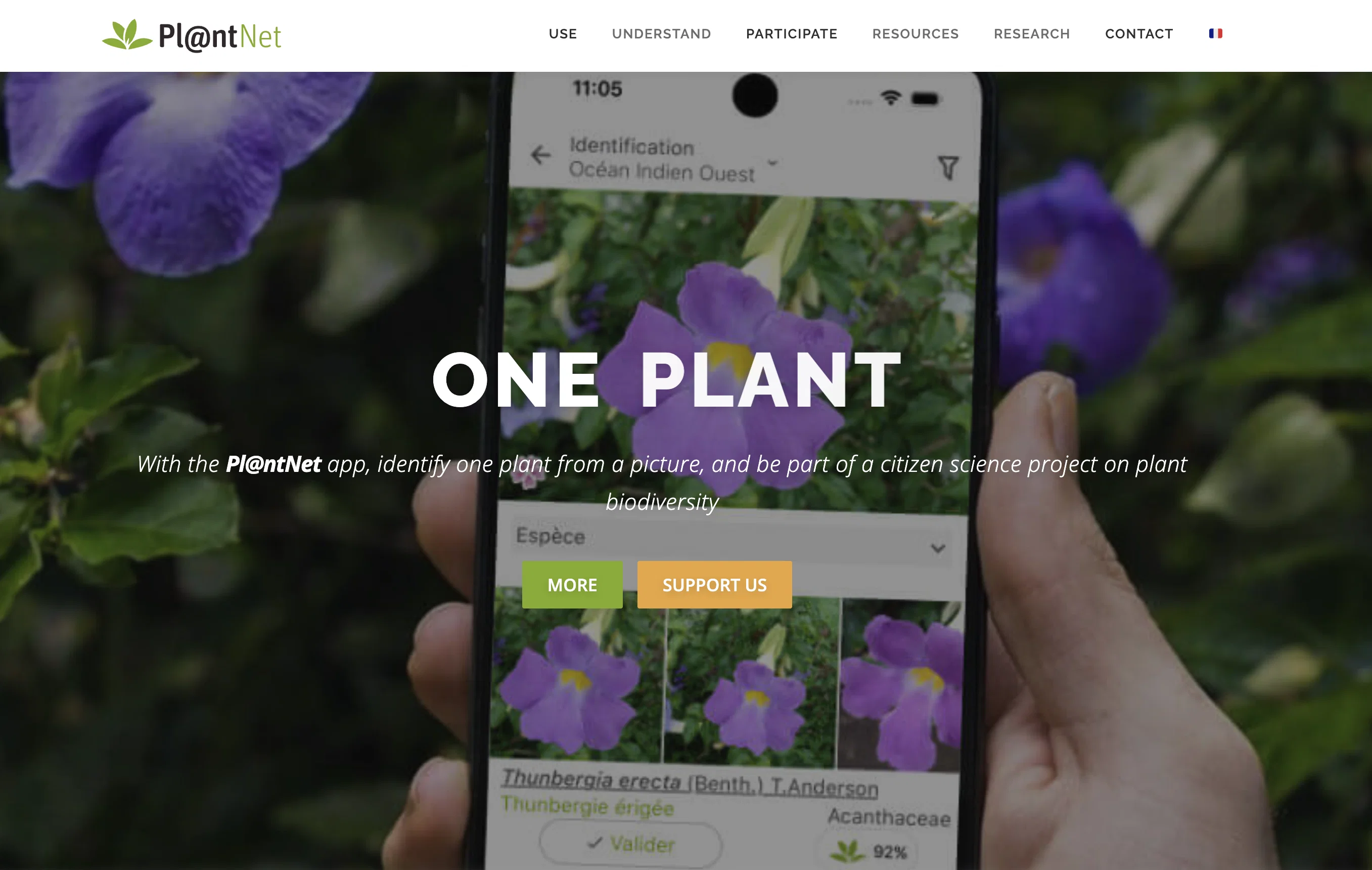
Pl@ntNet is a citizen science project that functions as a digital identification tool for plant species. The tool operates via a mobile application, which uses user uploaded images to identify different plant species. Users can participate in this project by submitting pictures of plants for identification, contributing to the database, and participating in collaborative reviews. The system operates based on image recognition, and the project encourages responsibility towards biodiversity. Alongside plant identification, Pl@ntNet also offers resources for developers including an API and open data. Part of a wider scientific and international cooperation initiative, Pl@ntNet is seeking to aid in understanding and preserving biodiversity globally. The offered API has been used for numerous identifications, marking key progress in automatically recognizing and cataloguing different plant species. The tool is available for download on multiple platforms. Help other people by letting them know if this AI was useful. Add your own prompts and outputs to help others understand how to use this AI.
When considering PlantNet for integration into your organizational workflow, we recommend deploying a structured score card across three critical operational pillars: Security & Compliance, Integration Friction, and long-term Price Scalability. Rather than looking only at basic feature lists, modern procurement teams must assess how a software platform behaves under high load and how well it fits into the team's data security guidelines.
Depending on your operating region and field, ensure that PlantNet supports standard security layers such as SOC 2 Type II certifications, GDPR compliance, or HIPAA-compliant database encryption. If the tool connects directly to client database tables or handles user passwords, verify that they implement multi-factor authentication (MFA), single sign-on (SSO) integrations, and end-to-end data encryption in transit and at rest.
Siloed data is the primary cause of operational friction. Evaluate if PlantNet has native connectors for your current project trackers, messaging hubs, and customer communication channels. For custom developer requirements, check if they provide a fully documented REST API with reasonable rate limits, comprehensive Webhooks support, and robust SDK packages in your language. A flexible API layer saves hundreds of hours of manual copy-paste overhead.
SaaS pricing packages are often deceptively simple. When reviewing PlantNet's billing structure, map out your team's projected expansion over the next 12 to 24 months. Determine how costs scale as your customer database increases or as you add team members. Factor in setup costs, mandatory support plan upgrades, API access fees, and storage overage rates to understand the true cost before committing to a contract.
By combining verified user reviews from our directory with internal workflow pilot tests, your procurement team can make an informed decision that drives productivity without creating capital waste.
Overall rating
Based on 4 reviews
quick IDs and the care tips are actually useful, not generic filler. watering reminders saved a couple of mine ngl. only gripe is the price, feels like a lot if you're not on it every week.
Shaikh Farhan
NOT FREE! DO NOT USE. ITS REQUIRED $99.99 A YEAR OR $15 A MONTH!!!!
John Doe
Actually impressive! I tested it on a random image of a plain yard and it did a really good job turning it into a modern garden. Asked it to add a stepping stone path and a planting layout and tbh it looked real and natural, well thought out. I like how the design respects the existing house style and feels realistic for the space and season. If you are looking for ideas for your garden design, this tool is more than worth trying
Andrew Pellegrini
this tool makes you feel like you paid attention to biology classes, it helps you name the plants around you and makes the outdoors feel a little less mysterious
Shaikh Farhan
Starting Price
Contact vendor for pricing
Pricing may vary based on team size and features selected.